The Government of Rwanda has made transport connectivity one of the central priorities of the National Strategy for Transformation 2 (NST2), recognizing that efficient transport infrastructure is essential for economic growth, regional trade, industrial development, and investment.
According to NST2, enhancing transport connectivity for economic growth and trade is one of the strategy's priority areas under the Economic Transformation Pillar. The government plans to improve transport infrastructure to reduce the cost of doing business, strengthen regional integration, and support the movement of goods and people across the country.
As a landlocked country, Rwanda depends heavily on efficient transport corridors linking it to ports in Tanzania and Kenya. Improving road networks and logistics is therefore viewed as critical to increasing exports, attracting investment, and improving competitiveness.
Significant progress already recorded
The Government says major investments made under the first National Strategy for Transformation have already improved national connectivity.
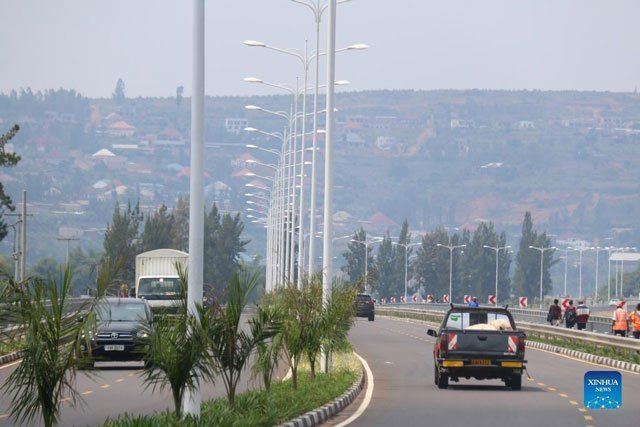
According to NST2, Rwanda constructed more than 1,600 kilometres of national roads and 4,137 kilometres of feeder roads during the implementation of NST1. Street lighting also expanded from 664 kilometres to 2,185 kilometres, while electricity access increased significantly, supporting urban development and economic activity.
The government intends to build on these achievements through additional investments that improve domestic mobility and strengthen Rwanda's connections with regional markets.
Transport and trade are closely linked
Economists generally consider transport infrastructure one of the strongest drivers of economic development because it lowers logistics costs, improves market access, encourages industrial investment, and increases trade competitiveness.
For Rwanda, where international trade relies heavily on road transport through neighbouring countries, efficient transport systems can significantly reduce the time and cost required to move imports and exports.
According to Vision 2050, future economic transformation will depend on investments in infrastructure, urbanization, innovation, and competitive industries capable of supporting sustained private sector led growth.
Regional comparison
Transport infrastructure has become one of the largest areas of public investment across East Africa.
Kenya continues to expand the Standard Gauge Railway linking Mombasa to Naivasha while modernizing highways and the Port of Mombasa, East Africa's busiest seaport. Tanzania has invested heavily in the Standard Gauge Railway connecting Dar es Salaam with the country's interior and neighbouring states, alongside upgrades to the Port of Dar es Salaam. Uganda is expanding its national road network and logistics infrastructure while developing oil related transport projects. The Democratic Republic of Congo is investing in strategic transport corridors to improve regional connectivity despite infrastructure challenges, while Burundi continues to improve road links supporting regional trade. These investments reflect growing competition among East African countries to become regional trade and logistics hubs.
Rwanda's approach focuses on ensuring that domestic transport infrastructure integrates efficiently with regional trade corridors, allowing businesses to access markets across the East African Community and beyond.
Supporting Vision 2050
Transport connectivity is expected to support several of Rwanda's broader development objectives.
According to NST2, improved transport infrastructure complements investments in manufacturing, agriculture, tourism, renewable energy, digital transformation, and private sector development. Better connectivity is also expected to facilitate trade, create jobs, improve access to services, and increase economic productivity.
Vision 2050 similarly identifies competitiveness and regional integration as key pillars of Rwanda's long term development strategy, emphasizing that modern infrastructure will be essential if the country is to achieve upper middle income status by 2035 and high income status by 2050.
As Rwanda implements NST2 through 2029, transport infrastructure is expected to remain one of the government's largest investments, supporting both domestic economic activity and deeper integration into regional and international markets.
Key Facts
- Transport connectivity is a priority under NST2.
- Rwanda built more than 1,600 km of national roads during NST1.
- More than 4,137 km of feeder roads were developed between 2017 and 2024.
- Improved transport is expected to reduce trade costs and increase competitiveness.
- Better logistics will support manufacturing, agriculture, tourism, and exports.
- Transport investment supports Rwanda's Vision 2050 economic targets.