
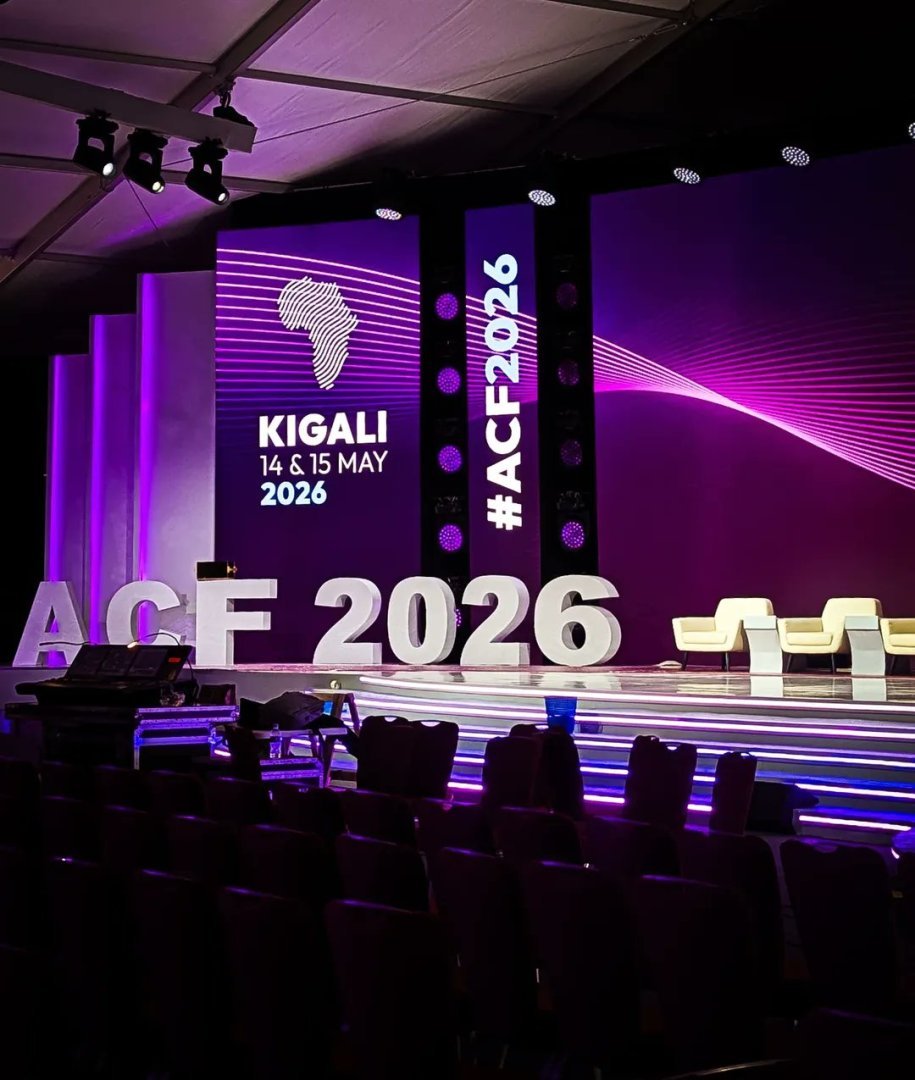
he core argument shaping the significance of the Africa CEO Forum in Kigali is that Rwanda increasingly views high-level international convening platforms not merely as branding exercises but as instruments of economic statecraft designed to channel investment flows, deepen geopolitical relationships, strengthen infrastructure financing access, and position Kigali within the strategic architecture of Africa’s emerging economic order. The forum reflects a broader effort by Rwanda to transform governance credibility, logistics integration, aviation connectivity, and diplomatic coordination into long-term capital attraction mechanisms across sectors including manufacturing, technology, energy, tourism, infrastructure, and financial services.
The evidence supporting this strategic positioning extends across several interconnected systems. According to Rwanda Development Board investment data, Kigali has steadily increased its role as a destination for conferences, investment summits, technology forums, and continental policy gatherings. Simultaneously, Rwanda has invested heavily in aviation infrastructure through RwandAir, convention infrastructure including the Kigali Convention Centre, digital governance systems, logistics integration, and business facilitation mechanisms designed to reduce transaction costs for investors. IMF assessments and World Bank governance indicators consistently rank Rwanda among Africa’s more institutionally coordinated economies, reinforcing Kigali’s positioning as a stable convening platform within a region often characterised by policy fragmentation and infrastructure asymmetry.
The strategic implication is that Rwanda increasingly understands conference diplomacy as part of a broader sovereign economic model resembling smaller coordination-intensive states such as Singapore, Mauritius, Qatar, and the United Arab Emirates, where infrastructure quality, aviation connectivity, regulatory predictability, and elite network centrality collectively generate disproportionate geopolitical and economic influence relative to territorial scale. The Africa CEO Forum therefore becomes less significant as an isolated event and more important as a mechanism through which Rwanda inserts itself into continental conversations surrounding industrialisation, infrastructure finance, energy transition supply chains, logistics integration, digital economy expansion, and African capital formation.
The risks remain substantial. Conference visibility does not automatically translate into productive investment or industrial transformation. Rwanda still faces structural constraints linked to landlocked geography, limited domestic market scale, high logistics costs, energy pricing challenges, and regional geopolitical instability connected to eastern Democratic Republic of the Congo. Kenya retains greater financial depth, Tanzania possesses maritime leverage and larger energy potential, while Ethiopia offers demographic scale attractive to manufacturers despite political volatility.
The opportunity window nonetheless remains strategically significant because Africa’s economic geography is reorganising rapidly around trade corridors, infrastructure systems, digital connectivity, and resource-linked industrialisation. States capable of converting diplomatic centrality into capital deployment may shape disproportionate shares of the continent’s next growth cycle.
The significance of the Africa CEO Forum therefore lies in what it reveals about Rwanda’s broader attempt to transform Kigali from a conference destination into a continental platform for investment coordination, strategic finance, and regional economic intermediation.
The Africa CEO Forum should therefore be understood not as an isolated business summit but as part of Rwanda’s long-term attempt to institutionalise a governance-centred economic model in which conference diplomacy, logistics infrastructure, aviation systems, regulatory efficiency, and geopolitical positioning collectively function as mechanisms for attracting capital, coordinating regional influence, and accelerating productive economic integration within East Africa and the wider African continent.
Conference Diplomacy as Economic Statecraft
The framework through which Rwanda’s hosting of the Africa CEO Forum must be interpreted extends beyond hospitality economics because Kigali increasingly deploys international convening power as a strategic tool of economic positioning within Africa’s evolving geopolitical and investment landscape. According to Rwanda Development Board figures and World Bank governance assessments, Rwanda has systematically invested in institutional predictability, conference infrastructure, digital administration, and aviation connectivity to position itself as one of Africa’s most administratively coordinated meeting points for political leaders, multinational corporations, sovereign wealth funds, and development finance institutions.
The significance extends beyond event branding because states competing for global capital increasingly rely on soft infrastructure systems involving governance credibility, regulatory predictability, logistics efficiency, and diplomatic access rather than relying exclusively on domestic market scale or resource abundance. The comparison with Singapore and the United Arab Emirates becomes analytically significant because both economies transformed themselves into regional coordination hubs by integrating aviation systems, conference economies, financial services, logistics infrastructure, and geopolitical neutrality into coherent national economic strategies.
Rwanda’s challenge differs materially because it operates within a more fragmented regional environment characterised by infrastructure deficits, energy constraints, logistical asymmetries, and political volatility across parts of the Great Lakes region. The institutional capacity required therefore involves converting short-duration executive engagement into long-term investment relationships linked to manufacturing, energy, logistics, financial services, tourism, digital infrastructure, and regional trade integration.
What appears to be conference hosting is increasingly becoming sovereign investment diplomacy.
Kigali’s Transformation Into a Coordination Platform
The significance of Kigali within Africa’s investment geography increasingly derives from its function as a coordination node rather than merely a national capital city. According to African Development Bank urban competitiveness analysis and IMF governance assessments, Kigali has emerged as one of the continent’s more predictable administrative and logistical environments relative to its size, allowing Rwanda to position the city as a neutral platform where investors, policymakers, and regional leaders can negotiate infrastructure partnerships, financing arrangements, and industrial collaborations.
The convergence of the Kigali Convention Centre, expanding aviation routes through RwandAir, digital governance infrastructure, conference tourism, and investment facilitation mechanisms reflects a deliberate state strategy rather than isolated sectoral growth. The comparison with Dubai and Doha becomes relevant because both cities leveraged connectivity and elite convening capacity to attract broader financial and commercial ecosystems.
The current moment matters because Africa’s economic integration process increasingly depends on intermediary hubs capable of coordinating fragmented regional systems involving logistics corridors, trade finance, industrial partnerships, and cross-border infrastructure. Rwanda’s effort to position Kigali within this architecture reflects recognition that economic influence in the twenty-first century increasingly derives from controlling or facilitating strategic flows of capital, information, diplomacy, and logistics.
The difference between conference cities that remain transactional venues and those that evolve into strategic economic hubs is determined by whether events generate durable institutional networks and long-term capital deployment mechanisms.
From Hospitality Revenues to Capital Formation
The framework through which the economic impact of the Africa CEO Forum should be analysed cannot remain confined to hotel occupancy rates, airline traffic, or tourism revenues because the more consequential issue concerns whether conference activity generates capital formation within productive sectors of the economy. According to Rwanda Development Board tourism and investment reports, conference tourism contributes significantly to foreign exchange earnings and international visibility, though Rwanda’s broader objective increasingly concerns the conversion of diplomatic visibility into infrastructure investment, industrial partnerships, and private capital mobilisation.
The significance extends beyond services growth because conference economies can either reinforce elite consumption ecosystems or catalyse productive investment networks linked to manufacturing, logistics, energy, digital infrastructure, and regional trade systems. The comparison with Mauritius is instructive because Mauritius successfully leveraged governance credibility and international financial integration into broader economic diversification strategies.
Rwanda’s institutional approach appears increasingly focused on integrating conference diplomacy with investment facilitation architecture involving the Rwanda Development Board, Kigali International Financial Centre initiatives, infrastructure partnerships, and AfCFTA-linked industrial positioning. According to IMF investment climate assessments, smaller economies frequently struggle to convert investment interest into scaled productive activity due to financing constraints, logistics costs, and limited domestic market size.
The strategic implication is that Rwanda’s success depends less on attracting attention than on sustaining investment pipelines capable of producing measurable industrial and infrastructure outcomes.
What appears to be elite networking is increasingly becoming competition over long-term continental capital allocation.
Infrastructure Signalling and Investor Psychology
The significance of the Africa CEO Forum also lies in how it functions as a demonstration mechanism through which Rwanda communicates governance capability, infrastructure quality, logistical reliability, and institutional coherence to international investors. According to World Bank governance indicators and African Development Bank infrastructure competitiveness data, investors evaluating African markets increasingly differentiate between states based not only on resource potential but also on implementation reliability, regulatory consistency, transport integration, energy systems, and administrative coordination.
The convergence of airport infrastructure, conference facilities, digital public services, security management, customs efficiency, and urban planning allows Rwanda to present itself as a functioning operational platform within a region where infrastructural fragmentation frequently increases transaction costs. The comparison with Vietnam becomes analytically relevant because Vietnam’s investment rise depended heavily on convincing multinational firms that infrastructure systems, industrial zones, and export logistics could support long-term production reliability.
The institutional capacity required for Rwanda to sustain this perception involves continuous infrastructure upgrading across energy systems, logistics corridors, aviation connectivity, industrial parks, and digital administration. Investors attending forums increasingly evaluate whether conference visibility corresponds to execution capability within sectors such as manufacturing, logistics, renewable energy, fintech, pharmaceuticals, and agro-processing.
The significance extends beyond perception management because investment decisions increasingly depend on ecosystem credibility rather than isolated incentives.
The Geopolitical Competition for African Capital
The current moment matters because Africa is becoming a major arena for geopolitical competition involving Gulf sovereign wealth funds, Chinese infrastructure lenders, European development finance institutions, American technology firms, and multinational corporations seeking exposure to the continent’s demographic growth, mineral reserves, energy transition supply chains, and expanding consumer markets.
The Africa CEO Forum increasingly operates within this wider geopolitical environment. According to World Bank infrastructure financing assessments and African Union industrial policy frameworks, African economies face enormous financing gaps across transport systems, energy infrastructure, manufacturing ecosystems, and digital connectivity. States capable of positioning themselves as credible intermediaries for capital deployment gain strategic leverage disproportionate to economic size.
The comparison with Qatar and the United Arab Emirates becomes particularly relevant because Gulf states historically used aviation systems, sovereign investment platforms, and conference diplomacy to extend geopolitical influence across Africa, Asia, and Europe. Rwanda increasingly appears to be adopting elements of a coordination-state model where diplomacy, logistics, finance, and infrastructure positioning converge.
The significance extends beyond bilateral partnerships because Rwanda’s ability to attract sustained capital flows depends on remaining strategically useful to multiple competing external actors simultaneously.
What appears to be conference participation is increasingly becoming geopolitical positioning within Africa’s next investment cycle.
Regional Competition and the East African Investment Hierarchy
The framework through which Rwanda’s conference diplomacy strategy should be evaluated must also account for intensifying competition among East African economies for investment centrality. Kenya retains superior financial depth, private-sector sophistication, and technology ecosystem scale anchored by Nairobi. Tanzania possesses maritime leverage, larger domestic market potential, and significant energy resources. Ethiopia commands demographic scale and manufacturing ambitions despite political instability. Uganda benefits from oil-linked growth prospects and geographic positioning.
Rwanda’s comparative advantage therefore derives less from market scale and more from governance discipline, implementation efficiency, diplomatic coordination, and logistical reliability. According to IMF governance analysis, investor confidence frequently depends on predictability and execution quality rather than scale alone, particularly for service-oriented investment and regional coordination activities.
The comparison with Botswana and Mauritius is also revealing because both countries leveraged governance credibility into disproportionate regional economic relevance despite limited demographic scale.
The strategic implication is that Rwanda increasingly competes not by replicating larger economies but by positioning itself as a high-efficiency coordination platform capable of reducing friction for international capital entering East Africa.
The Limits of Visibility Without Industrial Depth
The significance of the Africa CEO Forum ultimately depends on whether Rwanda can translate conference visibility into industrial and infrastructural depth capable of sustaining long-term economic transformation. According to African Development Bank manufacturing competitiveness assessments and World Bank industrialisation studies, many African economies successfully attract diplomatic attention and investment announcements without generating sufficiently dense productive ecosystems.
The difference between symbolic visibility and structural economic transformation is determined by whether capital flows enter sectors capable of generating export complexity, industrial employment, logistics integration, technological upgrading, and regional value-chain participation. Rwanda’s emphasis on industrial parks, logistics infrastructure, aviation systems, digital governance, and manufacturing investment suggests recognition that conference diplomacy alone cannot sustain economic transformation.
The comparison with Singapore again becomes instructive because Singapore’s rise depended not merely on hosting global conferences but on embedding those networks into port infrastructure, industrial policy, finance, technology systems, and export-oriented manufacturing.
The institutional capacity required for Rwanda to replicate aspects of this model involves sustained execution across energy infrastructure, logistics corridors, industrial financing systems, technical education, and regional trade integration under AfCFTA frameworks.
What appears to be a conference economy is increasingly becoming a test of whether diplomatic centrality can generate productive economic scale.
The Strategic Meaning of the Africa CEO Forum for Rwanda
The significance of the Africa CEO Forum for Rwanda therefore lies in what it reveals about Kigali’s broader understanding of economic power within a reorganising continental and global economy. The framework through which Rwanda increasingly approaches development strategy combines governance credibility, diplomatic positioning, logistics integration, aviation systems, digital administration, infrastructure signalling, and investment facilitation into a coordinated attempt to transform a geographically constrained state into a strategically relevant regional platform.
The convergence of conference diplomacy, AfCFTA integration, East African infrastructure expansion, Gulf capital flows, energy transition supply chains, and regional logistics competition means that Rwanda’s effort to host and institutionalise high-level investment gatherings increasingly forms part of a wider contest over who will coordinate capital allocation within Africa’s next economic phase.
The comparison with Singapore, Qatar, the UAE, Mauritius, and Vietnam should not be interpreted as equivalence but as evidence that relatively small states can achieve disproportionate influence when infrastructure quality, governance coordination, and geopolitical positioning align effectively within larger regional systems.
What appears to be a conference is increasingly becoming an instrument through which Rwanda negotiates its place within the future architecture of African capital, trade, logistics, and industrial transformation.
In the emerging African economy, the states that shape capital flows will increasingly shape the continent’s industrial geography, diplomatic hierarchy, and strategic future.