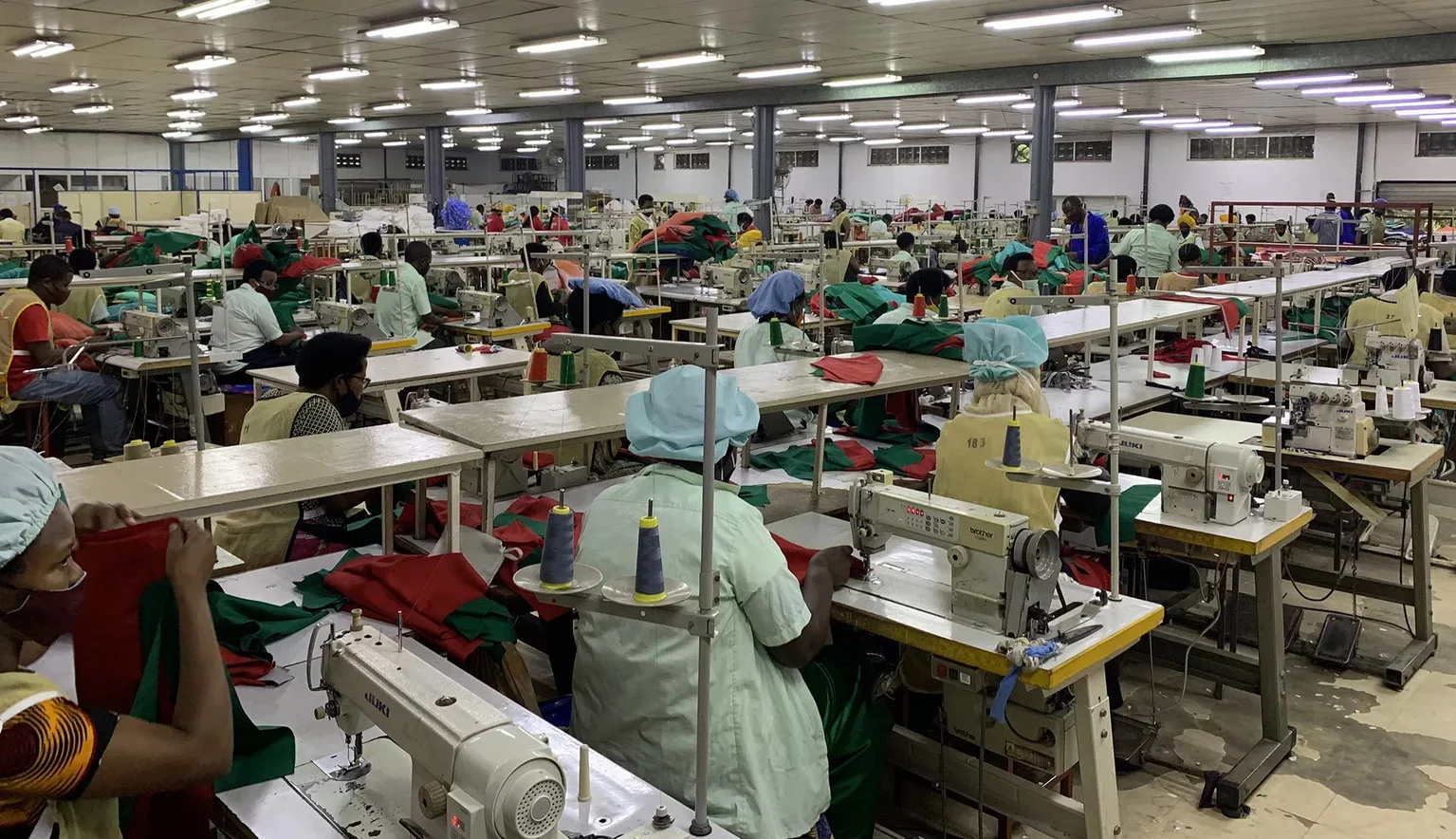
The Government of Rwanda has identified industrial development and domestic manufacturing as key priorities in its National Strategy for Transformation 2 (NST2), with the objective of reducing the country's trade deficit while strengthening economic resilience over the next five years.
According to NST2, Rwanda plans to accelerate industrial development by expanding domestic production, increasing exports, supporting value addition, and encouraging greater private sector investment. Manufacturing is expected to play a central role in achieving the country's long term Vision 2050 ambitions.
The strategy recognizes that Rwanda continues to import a significant share of manufactured goods, contributing to a persistent trade imbalance. By expanding local industries, the government aims to substitute imports, improve export competitiveness, and generate higher value economic activity within the country.
According to the NST2 preamble, reducing the trade deficit through the development of domestic manufacturing industries is among the government's principal economic priorities between 2024 and 2029.
Manufacturing becomes a pillar of economic transformation
NST2 identifies industrial development and export promotion as one of the country's eleven priority areas under the Economic Transformation Pillar.
The strategy proposes strengthening industrial productivity, improving competitiveness, expanding export oriented industries, and creating an enabling environment for private investment. These reforms are expected to contribute to higher incomes, job creation, and sustainable economic growth.
The industrial agenda complements Rwanda's broader Vision 2050 objective of building a private sector led economy supported by innovation, skilled labour, technology, and accountable institutions.
Regional competition intensifies
Rwanda's renewed focus on manufacturing comes as several East African countries pursue similar industrialization strategies.
Kenya remains East Africa's largest manufacturing economy, with established industries in food processing, pharmaceuticals, textiles, cement, chemicals, and consumer goods. Tanzania has expanded manufacturing through investments in cement, steel, fertilizer, textiles, edible oils, and automotive assembly, while Uganda continues to strengthen agro processing, steel production, pharmaceuticals, and building materials. The Democratic Republic of Congo and Burundi possess significant industrial potential but continue to face infrastructure and investment challenges.
Unlike some of its regional peers, Rwanda is positioning manufacturing as part of a broader strategy that combines industrial policy with digital transformation, logistics improvements, renewable energy expansion, and skills development.
Jobs and exports
Industrial development is expected to play a significant role in addressing employment challenges, particularly among young people.
According to NST2, productive and decent job creation is one of the government's priority objectives. Expanding manufacturing is expected to generate employment opportunities while increasing exports and strengthening Rwanda's participation in regional and international value chains.
The strategy also complements investments in transport connectivity, digital infrastructure, financial sector reforms, renewable energy, and urban development, all of which are intended to improve the competitiveness of Rwandan businesses.
Foundation for Vision 2050
According to Vision 2050, Rwanda's long term development model is built around private sector led growth, innovation, modern infrastructure, and economic diversification.
The government says sustained industrialization will be essential if Rwanda is to achieve its target of becoming an upper middle income country by 2035 and a high income economy by 2050.
Economists generally view manufacturing as one of the strongest drivers of structural economic transformation because it raises productivity, creates formal employment, increases exports, and stimulates investment across supply chains. Rwanda's latest development strategy places that principle at the centre of its economic agenda.
Key Facts
- Manufacturing is a priority under NST2.
- Government aims to reduce the trade deficit through domestic production.
- Strategy promotes export growth and value addition.
- Industrialization is expected to create productive jobs.
- Manufacturing supports Rwanda's Vision 2050 income targets.
- Private sector investment is central to implementation.