Rwanda’s elevation to the sixth (6) position in the 2025 “Shaping Global Perceptions: Africa’s Most Impactful Country Brands” report is not a symbolic milestone—it is the culmination of a deliberate, highly coordinated national strategy that has been unfolding over the better part of two decades. At a time when many nations continue to treat global perception as an afterthought or a public relations exercise, Rwanda has approached it as a core pillar of statecraft, integrating branding, policy execution, and international engagement into a single, coherent vision of national transformation.
What distinguishes Rwanda is not merely that it seeks visibility, but that it understands the structural value of reputation as capital. In today’s global economy, where decisions about tourism, investment, and partnerships are increasingly shaped by perception rather than proximity, a nation’s image can accelerate—or suffocate—its ambitions. Rwanda has chosen to operate with this reality in mind, methodically building a brand that signals reliability, order, and forward-thinking governance. Its rise into Africa’s top six is therefore less about recognition and more about validation of a model that treats perception as a strategic asset rather than a cosmetic layer.
Soft Power as Strategy: Beyond Visibility to Influence
There is a tendency, particularly among critics, to dismiss Rwanda’s international partnerships—especially in sports—as expensive branding exercises with limited domestic return. This interpretation fundamentally misunderstands the architecture of influence in the 21st century. Rwanda’s engagements with global franchises such as the LA Clippers and LA Rams, following earlier partnerships with leading European football clubs, are not isolated marketing deals; they are calculated entries into ecosystems that shape global culture, capital flows, and narratives.
By positioning itself within these ecosystems, Rwanda is not simply advertising to audiences—it is embedding itself within networks of influence that extend far beyond tourism. The visibility generated in North America, particularly in cities like Los Angeles, places Rwanda in front of high-value audiences: investors, creatives, policymakers, and diaspora communities who collectively shape global opinion and economic direction. Moreover, the inclusion of grassroots components—youth exchanges, community sports development, and infrastructure support—demonstrates that these partnerships are designed to create two-way value, linking global exposure with local impact.
This is where Rwanda’s approach diverges sharply from traditional models. Rather than pursuing visibility for its own sake, it is leveraging soft power to achieve strategic positioning, ensuring that every global engagement contributes to a broader narrative of credibility, capability, and ambition.
Kigali’s Quiet Transformation into a Global Convening Hub
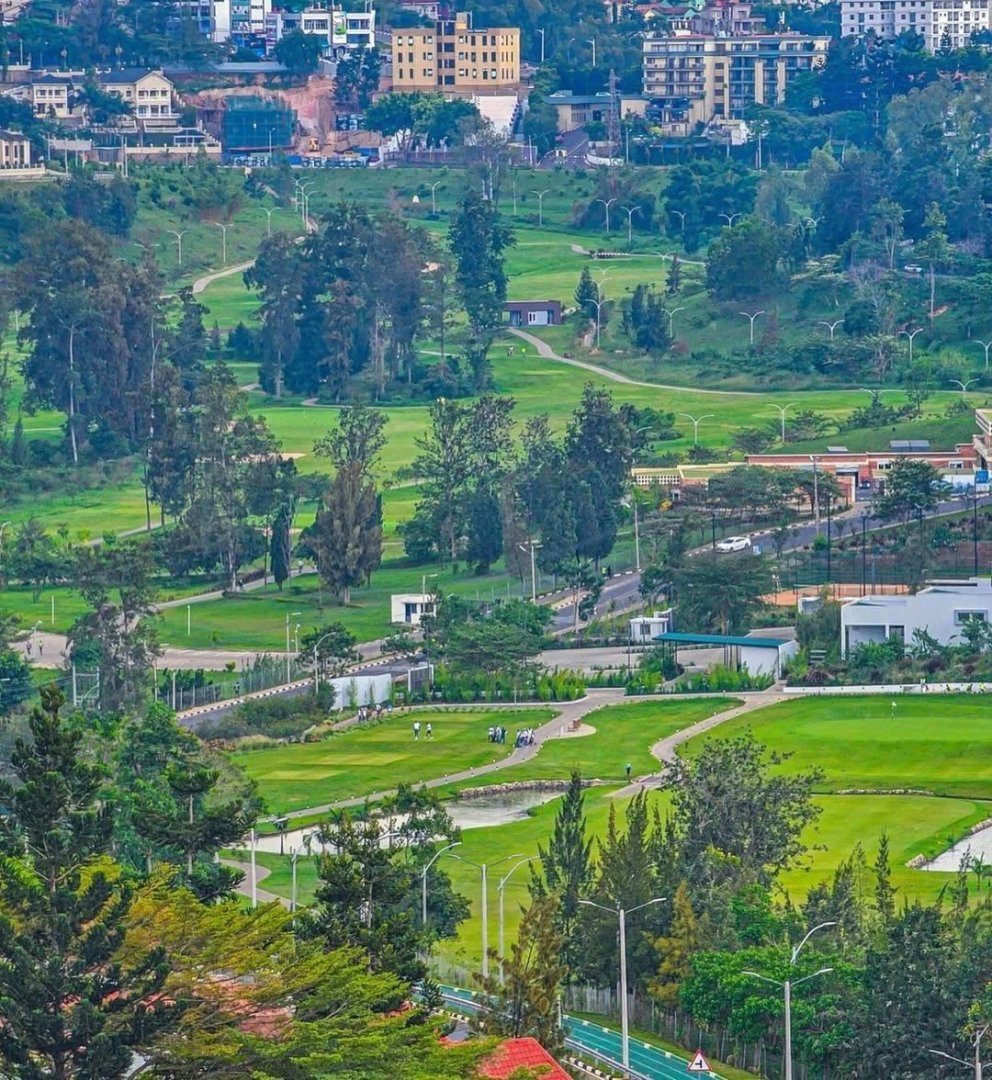
Equally significant is Rwanda’s transformation of Kigali into one of Africa’s most dependable and efficient destinations for international events. This shift did not occur overnight; it is the result of sustained investment in infrastructure, security, and institutional coordination. The successful hosting of the UCI Road World Championships in 2025—a first for the African continent—was not merely a logistical achievement but a symbolic statement: Rwanda can meet, and in some cases exceed, global standards.
What makes Kigali’s emergence particularly noteworthy is the consistency with which it delivers. In a global environment where event organizers and investors prioritize predictability, Rwanda has cultivated a reputation for execution that is both rare and valuable. Events such as the Basketball Africa League and the Move Afrika tour are not isolated successes; they are part of a broader pattern that reinforces Kigali’s identity as a city where complex operations are handled with precision and professionalism.
This reliability has far-reaching implications. It reduces perceived risk, shortens decision-making timelines for partners, and positions Rwanda as a default choice in a competitive continental landscape. In effect, Kigali is not just hosting events—it is redefining what is expected of an African host city.
From Brand to Balance Sheet: The Economic Logic of Reputation
One of the most overlooked aspects of nation branding is its direct connection to economic performance. Rwanda’s top-six ranking is not an abstract accolade; it is a lever that drives tangible outcomes across multiple sectors. A strong national brand functions as a signal of trust, and in markets characterised by information asymmetry, trust is often the deciding factor.
For tourism, this translates into a shift from volume-driven strategies to value-driven ones. Rwanda is not merely seeking more visitors; it is targeting higher-spending, experience-oriented travelers who are drawn by the country’s reputation for safety, exclusivity, and quality. This aligns with its ambition to generate $700 million in tourism revenue, a goal that depends as much on perception as it does on product.
In the realm of investment, the impact is equally pronounced. Global investors are increasingly attentive to governance standards, infrastructure reliability, and long-term stability. Rwanda’s ability to consistently deliver on international commitments sends a powerful signal that it is a credible destination for capital. The so-called “brand halo” effect—where positive perception in one domain influences decisions in another—becomes a critical advantage, particularly in sectors such as technology, hospitality, and services.
What Rwanda demonstrates is that branding, when executed strategically, is not an expense—it is an economic multiplier.
Escaping the Constraints of a Single Narrative
For much of its history, Africa’s global image has been constrained by reductive narratives that fail to capture its complexity. Rwanda, acutely aware of this dynamic, has taken deliberate steps to construct a more nuanced identity. While gorilla tourism remains a flagship attraction, the country has resisted the temptation to rely solely on this asset. Instead, it has invested in diversifying its global image through sports, culture, and high-level international engagements.
This diversification is not merely about image management; it is about expanding the country’s economic and cultural bandwidth. By presenting itself as a destination for conferences, sporting events, and cultural experiences, Rwanda broadens its appeal to a wider range of audiences. This, in turn, encourages longer stays, higher spending, and deeper engagement with the local economy.
More importantly, it challenges the broader tendency to define African nations through narrow lenses. Rwanda’s message is clear: it is not a single-story destination, but a multi-dimensional platform for experience, investment, and collaboration.
Diplomatic Influence Rooted in Credibility
Rwanda’s growing stature is also evident in its expanding role on the diplomatic stage. Hosting high-level gatherings such as the Francophonie Ministerial Conference reflect not only logistical capability but also political trust. In an international system where credibility is often hard-earned and easily lost, Rwanda has positioned itself as a country that delivers on its commitments.
This credibility translates into influence. It allows Rwanda to participate more assertively in discussions on trade, climate policy, and regional security, and to do so from a position of respect rather than dependency. Soft power, in this context, becomes a complement to traditional diplomacy, enhancing the country’s ability to shape outcomes rather than merely respond to them.
Conclusion: The Discipline Behind the Narrative
Rwanda’s rise into Africa’s top six nation brands is, at its core, a story of intentionality. It reflects a long-term commitment to aligning policy, branding, and execution in a way that reinforces a single, coherent narrative: that Rwanda is reliable, forward-looking, and globally relevant.
At a time when many nations are still grappling with how to define themselves in an increasingly competitive world, Rwanda offers a compelling case study in clarity of purpose. It has recognized that in the modern era, power is not derived solely from size or resources, but from the ability to shape perception, build trust, and deliver consistently.
In that sense, Rwanda has not simply improved its image—it has redefined its position. And in doing so, it has set a standard that others will find difficult to ignore.