
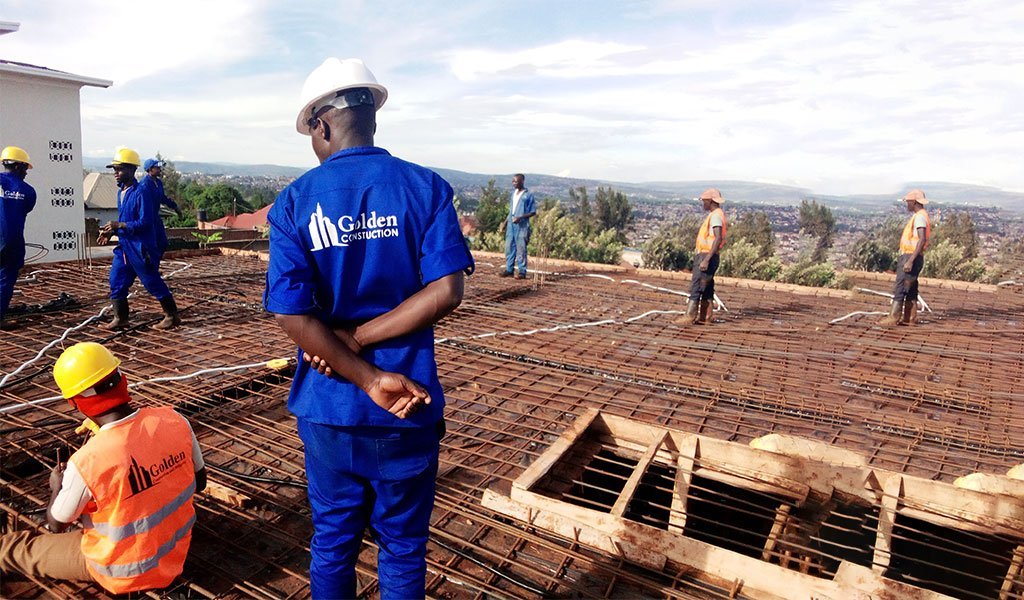
The Government of Rwanda has made productive and decent job creation one of its top national priorities under the National Strategy for Transformation 2 (NST2), as the country seeks to build a more competitive economy while improving employment opportunities, particularly for young people.
According to NST2, the creation of productive and decent jobs forms one of the eleven strategic priorities under the Economic Transformation Pillar. The government aims to generate employment by supporting industrial development, expanding private sector investment, strengthening entrepreneurship, and increasing productivity across the economy.
The strategy recognizes that sustained employment growth will be essential if Rwanda is to achieve its Vision 2050 ambition of becoming an upper middle income country by 2035 and a high income economy by 2050.
Strong progress during NST1
The Government says Rwanda made significant gains in employment during the implementation of the first National Strategy for Transformation.
According to NST2, the country created more than 1.3 million productive and decent jobs between 2017 and 2024. Labour force participation also increased from 53.4 percent in 2017 to 59.3 percent in 2023, reversing much of the disruption caused by the COVID 19 pandemic.
The strategy states that future employment growth will depend on expanding productive sectors capable of generating higher value jobs rather than relying primarily on low productivity activities.
Jobs linked to economic transformation
NST2 approaches employment as an outcome of broader economic reforms rather than a standalone programme.
According to the strategy, investments in manufacturing, agriculture, renewable energy, tourism, digital transformation, transport infrastructure, financial services, and urban development are all expected to generate employment opportunities while improving labour productivity.
The government also plans to improve education and skills development to ensure that workers are better prepared for emerging industries and technological change. Enhanced quality and market relevance of education forms one of the strategy's key priorities under the Social Transformation Pillar.
Regional employment challenge
Creating quality jobs remains one of the biggest economic challenges facing East Africa.
Across the region, Kenya, Tanzania, Uganda, Burundi, the Democratic Republic of Congo, and Rwanda all have rapidly growing and youthful populations entering the labour market each year. While economic growth has remained relatively strong in many East African countries, governments continue to face the challenge of creating enough formal, productive employment to match population growth.
Rwanda's approach differs by linking employment directly to industrialization, digital transformation, export promotion, and private sector investment rather than treating job creation as an isolated policy objective.
Vision 2050 places people at the centre
Vision 2050 emphasizes that economic growth must translate into improved living standards for all citizens.
According to the strategy, Rwanda aims to eliminate poverty by expanding opportunities for all members of society while investing in human capital, education, healthcare, safety, and economic participation. The document states that youth, women, men, and older persons should all contribute to and benefit from national development.
Vision 2050 also identifies enhanced human capabilities as one of the country's most important long term investments, alongside technological innovation, accountable institutions, and modern urban development.
Private sector expected to lead employment growth
The Government expects the private sector to become the primary engine of future job creation.
According to Vision 2050, Rwanda's next phase of development will be driven by a private sector led economic model supported by innovation, competitive industries, skilled workers, and improved infrastructure.
As NST2 is implemented through 2029, employment outcomes will be closely linked to the performance of sectors such as manufacturing, tourism, agriculture, digital technology, logistics, and renewable energy. Success in those sectors will play an important role in determining whether Rwanda remains on course to achieve its long term economic ambitions.
Key Facts
- Productive and decent job creation is a priority under NST2.
- Rwanda created more than 1.3 million jobs during NST1.
- Labour force participation increased from 53.4 percent in 2017 to 59.3 percent in 2023.
- Employment growth will be driven by manufacturing, technology, tourism, agriculture, and private investment.
- Skills development is a major component of the government's employment strategy.
- Job creation supports Rwanda's Vision 2050 income targets.